Brains


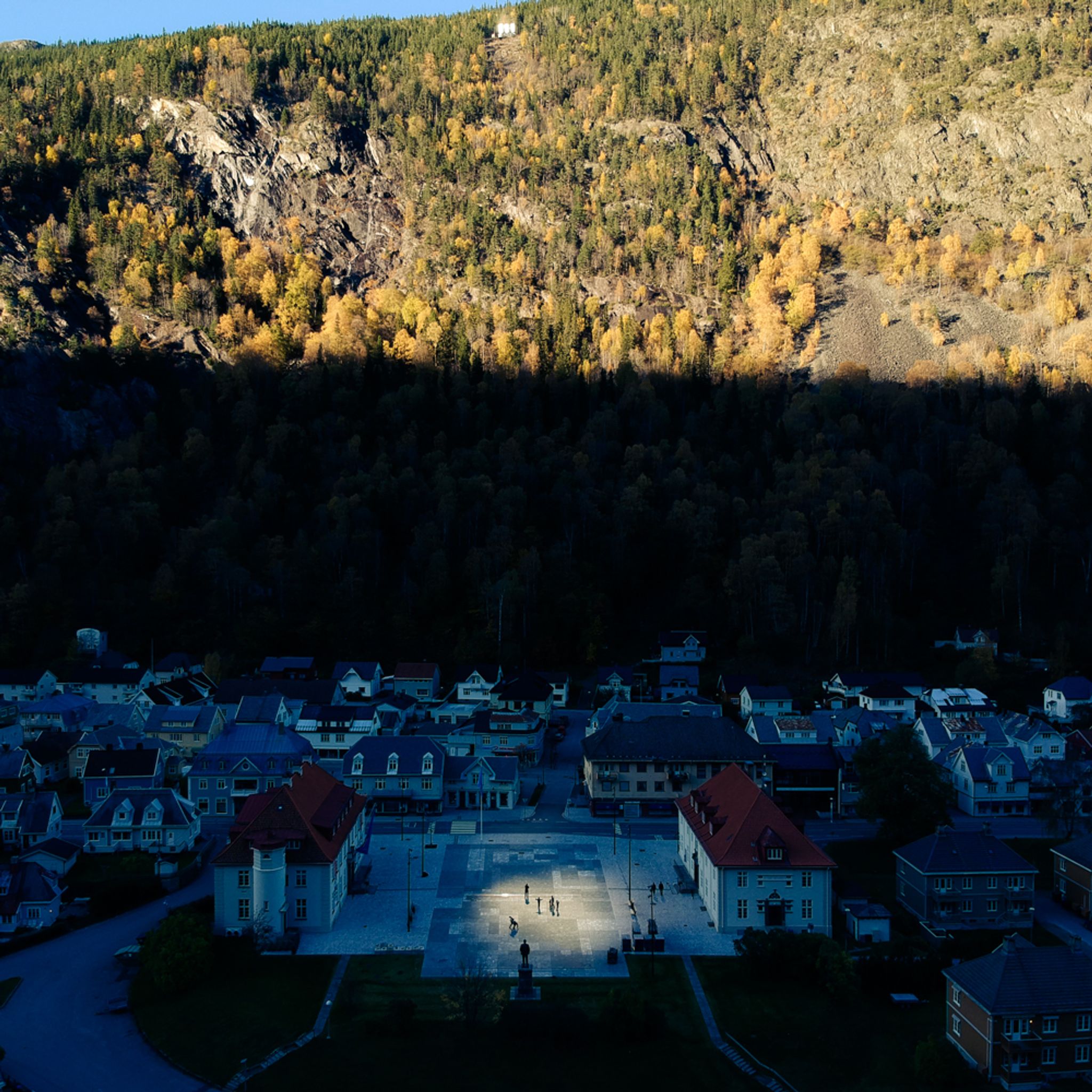
Rjukan is a town in Norway that experiences months of winter without direct sunlight due to its surrounding mountains blocking the sunlight. From September to March, the village is entirely in the shade, as the sun, covered by the 1,800-meter (5,905-feet) high peak Gaustatoppen, can’t penetrate the mountain. In 2013, this all changed when three huge solar-powered mirrors were installed on top of the mountain, reflecting sunlight onto the town square.
The idea was first thought of in 1913 by Sam Eyde, the founder of Rjukan, who understood the importance of sunlight in the winter and the effect it would have on the people and workers of the town. However, due to the limited technology of the time, he was unable to make it a reality. In 2005, Martin Andersen, a local artist and resident of the town, revisited the idea and proposed it. In 2013, the mirror was officially opened, 100 years after the original concept was conceived.
The town of 3,000 people spent 5 million crowns ($239,107) to build the three large mirrors, called “heliostats.” The mirrors, which were installed on a mountain above the town, are angled to follow the sun and reflect light down to street level. The mirrors are positioned and programmed to track the sun’s movement, which reflects the light down into the town square and other key areas. The mirrors don’t just provide direct sunlight to the town; they also improve the overall health and well-being of its residents.
Seasonal depression is a medical term for people who feel depressed during the winter months when there is significantly less sunlight, and many people stay indoors to avoid the bitter cold. Scientists and doctors have promoted people to get adequate amounts of daily sunlight, especially during the winter. This can be reduced when people are exposed to even a small amount of natural sunlight. These mirrors reflect light, bringing more residents and people outside to encourage social interaction and outdoor activities, despite the chill.
-
 1Rjukan, Norway, Uses Massive Mirrors to Reflect Sunlight Onto the Town During Months of Winter Darkness →
-
2SnowBrains Trips Canceled →
-
3Vail Resorts Shareholder Lawsuit: Katz, Price-Fixing Claims →
-
4Loon Mountain Proposes Massive 280-Acre, Four-Lift Expansion →
-
5Beartooth Pass, MT/WY, to Close Early as Winter Storm Approaches →


The mirrors are located 420 meters (1,378 feet) above the town on a mountainside and are environmentally friendly because they don’t produce any waste. A solar-powered engine is installed at the base of each mirror that follows the sun’s movements during the day to maximize the effect. It is a simple and effective way to harness natural energy to provide light without creating any carbon emissions. The Italian Alps village of Viganella and the Austrian town of Rattenberg also use much smaller heliostatic mirrors to create artificial sunlight in the winter.
Although the mirrors can be seen as a success, initially, some 1,200 residents of Rjukan signed a petition against building the mirrors due to the cost of the project. However, they were outvoted by the other residents, and the project was built. Despite initial cost concerns, the eco-friendly mirrors have boosted community life and fulfilled a 100-year-old dream. Rjukan’s heliostats brought light to a town left in the darkness of winter, improved its residents’ health and mood. This innovative, eco-friendly solution demonstrates how harnessing natural energy can enhance well-being and foster social connections.