 Brains


For most people visiting Japan to ski or snowboard, the choice usually comes down to two multi-area mega-resorts: Niseko United or Hakuba Valley.
Niseko is in Hokkaido, Japan’s second-largest island and northernmost prefecture, and is accessed via Sapporo’s New Chitose Airport. Honshu, the main island, is south of Hokkaido, and is where you’ll find Tokyo, the Japanese Alps, and Hakuba Valley.
Niseko and Hakuba are a draw because they tick all the boxes that international tourists look for: reliable snow, varied terrain, extensive vertical and piste mileage, modern lifts with a high-capacity gondola, off-piste and side-country access, a good selection of accommodation from budget hotels to deluxe apartments, and a lively restaurant and nightlife scene. Many people also want English to be widely spoken and for lessons and guiding to be available in English. But if you want to stay away from the “gaijins,” and experience a more authentic ski trip in Japan, the country has hundreds of smaller ski areas to choose from.
Japan is famous for having more than 500 ski areas, but most aren’t “resorts” at all and don’t claim to be. Ranking Japan’s top 100 ski areas by piste length, you’re looking at just 6 miles of piste and a few lifts when you get down to the 80s. So it can be daunting to figure out in a foreign language which authentic Japanese ski areas are worth your time.
Here, I’ve put together my pick of 10 ski areas that are regularly overlooked, underrated, or completely unheard of outside Japan. Underrated doesn’t necessarily mean unknown or completely deserted. Each one has a strong reason for your attention, and it’s unlikely these spots will have you fighting for space the way Niseko or Hakuba’s busy resorts can on a powder day.
#10 Togakushi Ski Field, Nagano City, Nagano
Togakushi is a small resort with just seven lifts, 19 courses, and 1,750 feet (~530 meters) of vertical, but it has something that others don’t. It’s also about as close to Nagano City as a resort of any real size gets, which makes it a solid option for a day’s skiing if you’re passing through or staying in the city itself.
What earns it a special mention is what sits right next door: Togakushi Shrine, one of the country’s most significant spiritual sites. I’m not especially into temples and shrines, but it’s genuinely interesting, and the pairing with a day on snow is a novelty. In winter, the famous cedar-lined approach path is fenced off, but you can still drive right up near the torii gates and walk straight in. Finish the day with a bowl of the famous local handmade soba noodles.
It’s about 45 minutes by car from Nagano Station to Togakushi, or a little over an hour by local bus. Watch the time, though, as the last bus back leaves early.
Togakushi is on the Indy Pass.

#9 Fujiten Snow Resort, Narusawa, Yamanashi
Fujiten is just a 90-minute drive from Tokyo, yet hardly anyone knows there’s a ski resort south of the city. When the other weekenders or day-trippers are cramming on the trains or stuck in traffic going north, it can be much easier to hire a car and take a leisurely trip to Mount Fuji, Japan’s tallest volcano. There are four lifts here with seven courses, and just 650 feet (~200 meters) of vertical.
Full disclosure: I haven’t ridden the mountain myself, but I have recommended it to a few families, all of whom came back having genuinely enjoyed it. It obviously doesn’t get the natural snowfall totals of the resorts further north. On the plus side, the views are great, and the gentle, cruisy, exceptionally wide groomers are perfect for a family-friendly taste of skiing in Japan when you don’t have the time for an extended trip. If you don’t like overcast conditions, Fujiten is one of Japan’s sunniest ski resorts, and peak winter is the perfect time to view Mount Fuji from the slopes.
Without a car, it’s about 2 hours by train or express bus from Shinjuku to Kawaguchiko Station, then a short shuttle or taxi to the resort.

#8 Kiroro Snow World, Akaigawa, Hokkaido
Kiroro is well known internationally, but it’s still underrated. Its piste network is very family-friendly, with nothing here to frighten anyone, but its deserted backcountry has amazing terrain and truly stunning scenery. There are 10 lifts, 23 official courses, and 2,150 feet (~655 meters) of vertical.
Japan gets a lot of snow, and Hokkaido is the snowiest region. Kiroro sits just 19 miles from the coast, where storms hit first after crossing the sea and unload the deepest accumulations. It can easily snow for 30 days in a row here. People sometimes avoid Kiroro because they think there’s nothing challenging here, but for someone who wants a luxury all-inclusive family stay where the kids get looked after on the slopes while the parents tour the backcountry, it can’t be beaten.
The crowd here is genuinely international, with a decent showing from Europe, the UK, and Australia; it’s just not overrun with budget travelers the way Niseko and Hakuba can be, mostly because staying at Kiroro isn’t cheap. You can easily day trip from a base in nearby Otaru, though, if you’re on a budget.
Kiroro is about 90 minutes by bus or car from New Chitose Airport, or just a 30-minute drive from Otaru (around an hour by bus).

#7 Okushiga Kogen, Yamanouchi, Nagano
Okushiga Kogen sits at the far northern tip of Shiga Kogen, the largest interconnected ski area in Japan, but it feels like its own separate resort once you’re up there. The elevation is what makes it special. With a base above 4,800 feet (~1,460 meters) and a peak around 6,500 feet (~1,980 meters), it holds cold, dry snow right through the season and is often still fully skiable into May. The rule is: if it’s raining elsewhere, drive to Okushiga Kogen. It will be snowing.
Okushiga Kogen has six lifts, 11 official runs, and 1,700 feet (~520 meters) of vertical. The mood up here is noticeably calmer than the busier hubs lower in the Shiga Kogen network. Several hotels are spread across different mini ski areas, lifts, and altitudes rather than one obvious base. In the evening, everyone does their eating and drinking at their hotel, since there isn’t really a centralized, walkable village or any kind of nightlife. Basing yourself here also saves the hassle of the connector tracks and tunnels linking the busier, more central parts of Shiga Kogen, so you can focus on your own patch of tree runs, steeper reds, and short blacks.
Okushiga Kogen is about 90 minutes by bus from Nagano Station, or around 15 minutes less by car, although this is one of the more mountainous drives, so make sure you have an AWD vehicle.
Okushiga Kogen and the wider Shiga network are on the Ikon Pass.

#6 Ryuoo Ski Park, Yamanouchi, Nagano
Ryuoo is part of the Kita-Shiga Kogen cluster of ski areas, and although popular with young Japanese day-trippers, it’s completely unknown to western visitors. The main draw is the huge-capacity 166-person tram (known as a ropeway in Japan), which takes you to the top of a giant off-piste zone that most of the young day-trippers avoid. Ryuoo has eight lifts, 17 courses, 3,500 feet (~1,070 meters) of vertical, one of the largest vertical drops in Japan.
The off-piste zone requires a quick safety registration before the guard will let you in. Most visitors stick to the gentle green runs and the beginner area near the top. This leaves the safely guarded steeps and tree runs for the small crowd of higher-level skiers and riders that come here.
Ryuoo is within an hour’s drive of the cluster of resorts northeast of Nagano City, such as Nozawa Onsen or Myoko Kogen, and it’s right next door to Shiga Kogen. You can get a bus from Yudanaka Station in around 30 minutes, which is about 50 minutes by train from Nagano Station.
You wouldn’t want to stay here for multiple days, but it’s great for a day trip after heavy snowfall when everyone else is fighting it out at the nearby freeride powder resorts like Lotte Arai. When it dumps, I’m a firm believer in avoiding the classic powder-day magnets and going to the resorts where you can enjoy fresh tracks all day.

#5 Yamaboku Wild Snow Park, Takayama, Nagano
An hour’s drive east of Nagano City, away from the Japanese Alps and the cluster of resorts north of the city, Yamaboku is home to the eight-mile-long (~13 km), 2,600-foot (~790 meters) descent Tacochi course, which it calls the longest run in Japan. It’s only open on weekends and holidays; it’s limited to 75 people a day, and while it’s sensible for first-timers to use a guide, it isn’t prohibited to do it without one, but you must register and pay a fee.
Yamaboku’s main ski area has three lifts and 16 courses, with 900 feet (~275 meters) of vertical. The ski area is small, but it has some ungroomed areas and is good for a few warm-up laps.
Technically, the Tacochi course is neither a marked in-bounds piste nor an unmarked backcountry descent. The route follows a mountain road, closed to traffic in winter and groomed to make the flat and uphill sections easier to navigate. Still, it’s considered backcountry, and you’ll need backcountry equipment, which you can hire. The snow-covered road links together a series of short, signposted but ungroomed sections through the trees. Nothing here is extreme, but some sections will definitely trouble intermediates and lower. The beautiful thing is, you can stay on the road and skip any sections you don’t like the look of.
You’re not there for the terrain, the depth of snow, or the snow quality; you’re there for the novelty of an eight-mile run and the tranquility of being alone in the forest. No intensive hiking or skinning is involved. With a groomed path and clearly marked descents, it’s actually the perfect introduction for someone who’s a bit nervous about going into the open backcountry. At the bottom, it’s a five-minute walk to the shuttle bus back to Yamaboku that’s included in the price. One descent a day is normal because of the way the bus schedules work.
The village is just a small car park, local housing and farm buildings, plus a unique restaurant-store that sells local produce. Tourists do not come here. You can contact the local office by email, and they are happy to reply in English to sort out the logistics.
A day trip here is best if you’re staying in Nagano City or one of the nearby ski areas and have a vehicle. The drive is around 1 to 2 hours. Public transport isn’t worth the multiple changes. If you want to see the real Japan, this is it.

#4 Seki Onsen, Myoko, Niigata
Judged by the standards of an international ski resort, Seki Onsen is tiny: a small village with a tiny office and ticket booth, two old chairlifts, four courses, and 1,000 feet (~300 meters) of vertical. No public toilets, and nowhere for visitors to go inside except the handful of local restaurants. It’s one of the oldest ski areas in the country, and I’m not sure much has changed since the lifts were built.
What it does have is a very relaxed sidecountry access policy. You can basically go anywhere under your own responsibility. To do this, you should have a guide and backcountry equipment, or at least some route-finding knowledge. It can be a little shocking to come across completely unmarked, exposed running water or deep holes in the middle of high-traffic sidecountry routes back to the lift, but Seki Onsen has decided to let people make their own decisions about safety. If you’re against the many roped-off areas and no-go zones in Japan, then Seki could be what you’re looking for. It’s another ski area most tourists haven’t heard of, but locals and foreign residents know and love.
-
 1
Alta, UT, Report: “How Much Did It Actually Snow?” | Dispelling the Misinformation in Little Cottonwood Canyon
-
2
The 13 Largest Ski Resorts on Earth, Ranked by Size
-
3
23-Year-Old Local Speed Rider Dies on the North Face of Chamonix’s Aiguille du Midi [UPDATED]
-
4
Some New Zealand Ski Resorts Still Open And Saw 20cm of Fresh Snow
-
5
SnowBrains 2026-27 Ski Season Forecast, Region by Region: El Niño Favors the High Sierra Over the Northern Rockies


There is a short beginner run down at the base, but apart from some cat tracks, the rest is completely ungroomed, and that’s exactly why people who take their powder seriously flock here after a big dump. There’s a multitude of technical sidecountry lines in every direction, but because the marked courses are so small, even a couple of hundred people turning up on a powder day is enough to make it feel busy at the base. There are lift lines, and a scramble for fresh tracks once the top chair opens, but we’re only talking a 20-minute wait, which thins out once the lifts are running. Make sure you’re there for first lift. This isn’t the place to learn or to get your first taste of deep powder, but for someone who already knows how to handle deep snow and tight trees and is prepared to traverse for fresh snow as the day progresses, it’s a good option if you’re in the area. It’s considered part of the Myoko cluster of resorts and well worth a day trip.
Seki Onsen is about 2 hours by Shinkansen from Tokyo Station to Joetsu-Myoko Station, then a short local train to Sekiyama Station and a 10-15 minute taxi or bus to the resort. It’s around 20-30 minutes by car from the other Myoko Kogen cluster of resorts.

#3 Kamui Ski Links, Asahikawa, Hokkaido
If you want deserted slopes and long intermediate cruisy runs, Kamui Ski Links is hard to beat. Foreign visitors may be surprised to learn that Japan doesn’t have many long courses with consistent pitch. That’s just the topography of volcanic mountains; the run back to the lift is often long and flat at the bottom (this also helps protect the base areas from avalanches).
Kamui’s six lifts, 25 official courses, and 1,950 feet (~595 meters) of vertical mean that it’s a compact resort, but it feels different. You’ve got a good selection of blacks and reds that you can bomb on repeat without touching a green or a lift line, and the 2.5-mile (~4 km) top-to-bottom runs only have a short green section that still has some pitch. This isn’t close to North American-level expert terrain, but it is still very enjoyable for stronger skiers and riders who want to get some miles in.
The lack of crowds and the low temperatures in the region also mean the pistes hold together until the end of the day. If you don’t like going into the trees, Kamui leaves 30% of its runs ungroomed. There’s also plenty of lift-accessed sidecountry and backcountry on offer.
The views back across the Asahikawa basin are stunning. Asahikawa is a big city and is worth the trip on its own merits. It has a great food and nightlife scene, plus affordable, good-quality chain hotels and traditional accommodation. There’s no village or hotels at Kamui, so it’s a 30-minute drive or 45-minute bus ride from Asahikawa. The ski bus network here is good, and they will ferry you to a handful of local ski resorts, including Pippu Ski Resort and Santa Present Park. The buses have storage space for gear underneath.
Asahikawa is about a 2-hour drive, or 2.5 hours by train (via Sapporo), from New Chitose Airport. Domestic flights also run into the smaller Asahikawa Airport, just 40 minutes from the city center.
Kamui Ski Links is on the Indy Pass.

#2 Aomori Spring, Ajigasawa, Aomori
Aomori Spring is on a dormant volcano in the far northwestern corner of the main island, Honshu. It’s close enough to Hokkaido to be hit by the same storms but remote enough to keep people away. Aomori Spring has five lifts, 14 official courses, and 1,700 feet (~520 meters) of vertical. Amazingly, it limits the number of lift passes sold each day to 1,200, but it rarely reaches that number anyway.
There’s also no village here, but it benefits from a more traditional western-style hotel setup at the base with modern en-suite rooms. The hotel has a nice lounge-style bar (surprisingly rare in Japan outside of Hokkaido), and there’s even a noodle bar at the second base area.
It also carries more weight than you’d expect from somewhere this remote. It’s Japanese Olympic snowboarder Ayumu Hirano’s home resort, the US snowboard team trains here, and it has the largest of only a handful of competition-grade superpipes in the country.
The resort runs guided tours through the tree runs and into the accessible sidecountry off the back of Mount Iwaki. Most of the in-bounds terrain is fairly mellow, but this is perfect for building confidence in the tight trees. The steeper stuff sits on a separate peak, off the Diamond chairlift, where you can lap some interesting terrain with small drops and natural features. It’s noticeably colder on this side, and the snow accumulates so much that they normally have to dig the lifts out in the morning.
The compromise is the lack of a village and the remote location, but the Shinkansen only takes around three hours from Tokyo to Shin-Aomori. There are no local bus services, so you’ll need a rental vehicle or taxi for the 80-minute drive to the resort. That’s why it’s virtually impossible for it to get busy here.
Aomori Spring is on the Indy Pass.

#1 Geto Kogen, Kitakami, Iwate
Geto Kogen is barely known outside Japan, but its snow record is astonishing. A typical season sees somewhere north of 60 feet (~18 meters) of snowfall at the base, and even a weak year still lands around 30 feet (~9 meters), numbers that would make headlines if this were a resort in North America or the Alps.
Geto has five lifts, 14 marked courses, and 1,400 feet (~430 meters) of vertical. The entire resort base, including the gondola station, ticket counter, restaurants, onsen, and guest rooms, sits within one vast, self-contained mountain complex. No other buildings or businesses are within walking distance, which is common because of national forest planning rules. Nothing quite like it exists in Japan, and it gives the place a completely different feel from other ski resorts. It has a small number of hotel-style rooms, but the main accommodation is an 88-bed capsule-style dorm right at the base.
For such a compact resort, the tree runs are genuinely excellent, with a proper grading system running from short, gentle sections for people trying trees for the first time right up to terrain for experts with technical gullies and tight trees (although the steeper sections are often short). The crowd is mostly Japanese regulars rather than international tourists, and many stay on the pistes, so you can often find fresh tracks deep into the afternoon, especially on weekdays (the weekends are noticeably busier). Due to a unique microclimate, it snows so much here that it’s not unheard of for your own tracks to have disappeared by the time you’ve done a lap. The trade-off is that it doesn’t have a village, but if you want super-deep snow, you’ll likely find it at Geto.
It’s about 2.5 to 3 hours by Shinkansen from Tokyo Station to Kitakami Station, followed by a 50-minute shuttle bus to the resort.
Geto Kogen is on the Indy Pass.
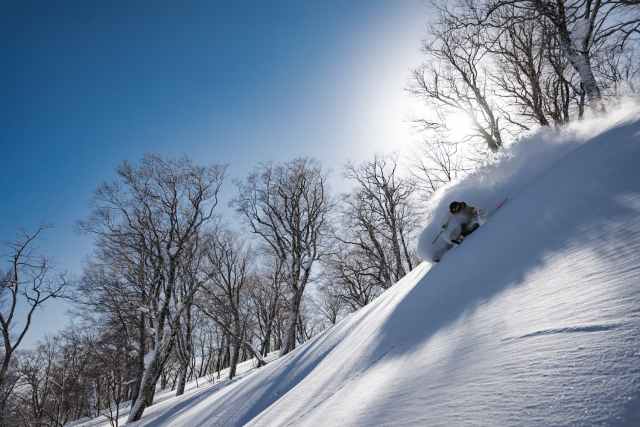
If you decide to choose one of these underrated ski areas, there will be compromises. However, not everyone needs miles of pistes, English-speaking instructors, luxury hotels, double-black diamond runs, or late-night bars. Visitors to Japan are now deliberately avoiding Niseko, Hakuba, and Nozawa because they don’t want to go where everyone else is going. It’s time to spread out, avoid the crowds, and experience more of the real Japan.


If you’re going to claim a new world record annual average, please provide the data to back it up.