 Weather


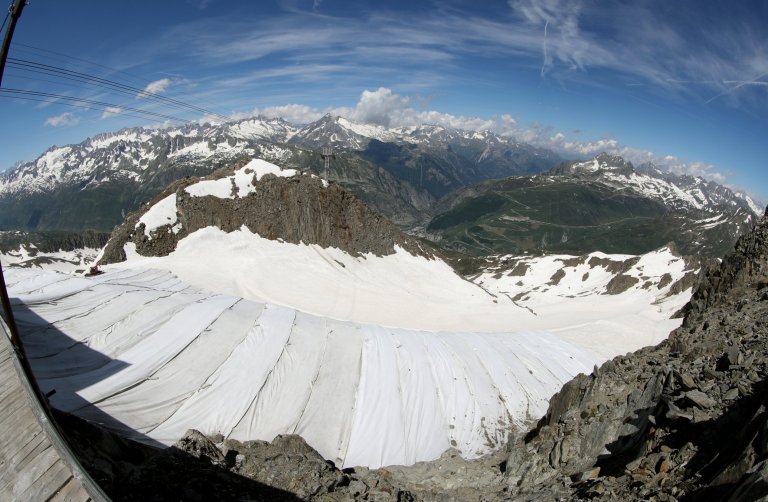
Another Swiss glacier is meting so swiftly that it has been covered with tarpaulin to try and slow down the rate. Parts of the Gurschengletscher glacier are being blanketed with tarps near the peak of Mount Gemsstock, standing at 9,715-feet high.
The glacier in Andermatt, Switzerland, is just the latest to be given this treatment in a bid to stop it retreating. The Rhône Glacier has been covered every year since 2010 during the summer. David Volken, a Rhône glaciologist, told USA Today:
‘It reduces the melting by 50% to 70%.’
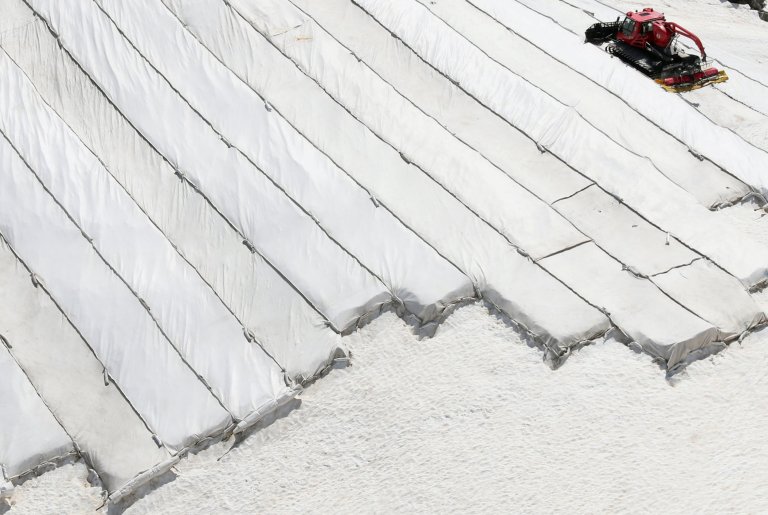
The blankets are stuffed with a heavy-duty fleece material which insulates the ice and reflects back sunlight. They are left on the glacier from spring until fall when the glacier is most vulnerable. Matthias Huss, head of the Swiss Glacier Monitoring Network, said: ‘The blankets protect the underlying snow and ice from the sunlight. Another benefit is the thermal insulation they provide.’
Although they don’t totally stop the melting, he said ‘these blankets are very useful in slowing down ice loss locally’. However, he said only a small amount of the glacier can be covered at a time, adding: ‘This method will never be able to save our glaciers or to counteract the negative consequences of climate change.’

Canvas Tarpaulins are made from 100% cotton duck. They are water-resistant and breathable. Our Canvas Tarpaulins are an eco-friendly alternative to polythene sheets because it is made up of cotton. They are used in places where you need covers and protection against rain or storms.We also supply heavy duty Canvas Tarpaulins Canvas Tarpaulins.