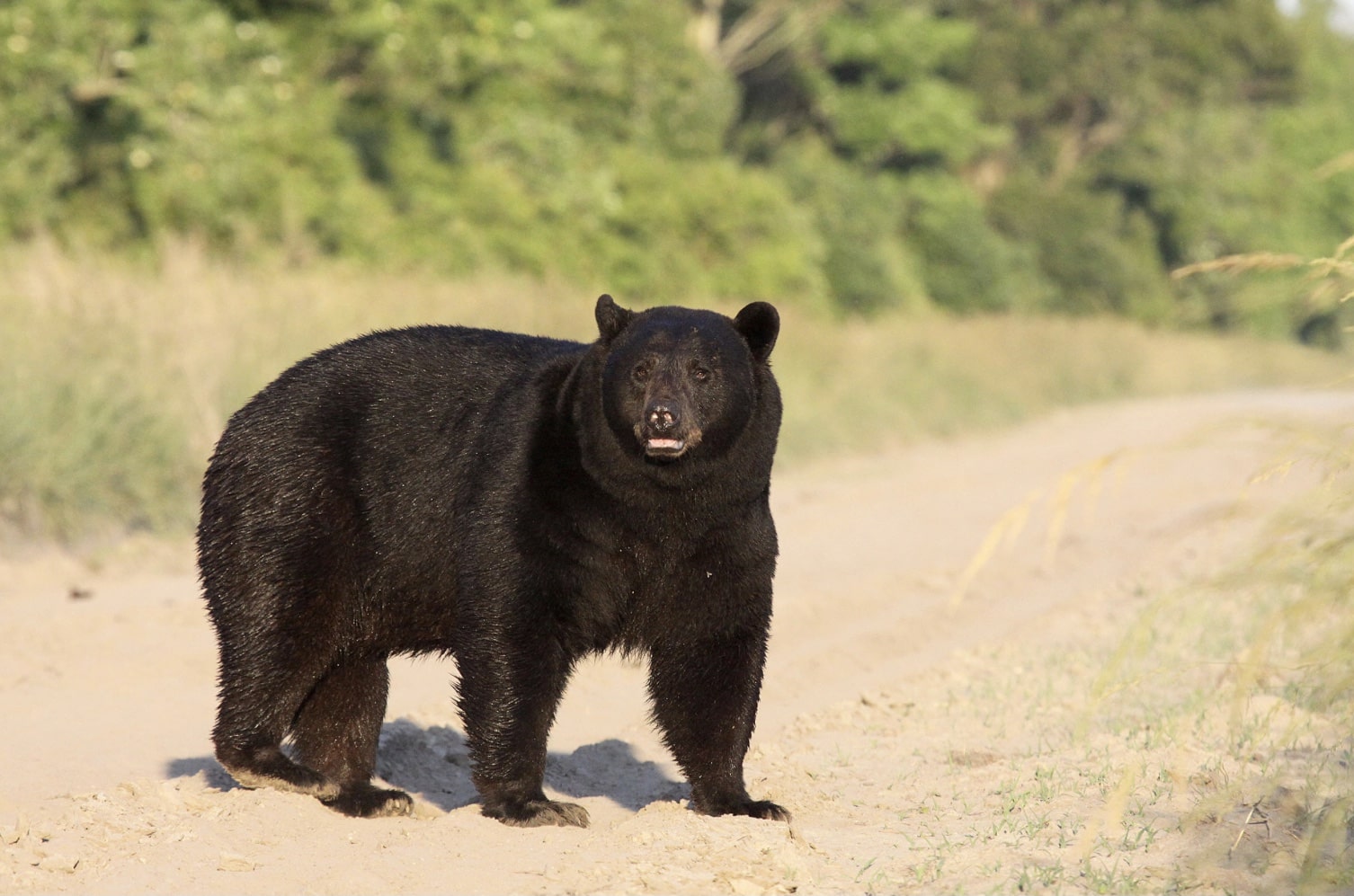
As the snow melts across Lake Tahoe, another season begins: bear season. The bears are emerging lean and hungry from their dens after a long winter underground, entering a landscape that is about to refill with people. It’s a fragile moment. Natural food is still scarce — the berries, acorns, and grasses haven’t caught up yet — and bears that wake hungry will go looking. Sows will lead their cubs out into the daylight for the first time, teaching them how to forage, how to climb at the first sign of danger, how to read the wind. How to be a bear. Everything those cubs learn this spring will shape the rest of their lives.
At the same time, the basin is about to fill back up. The ski crowds are leaving, but the hikers, paddleboarders, and beachgoers are already booking their cabins. By Memorial Day, Tahoe’s population will have doubled. Trash cans will overflow. Coolers will sit on porches. And the conditions for human-bear conflict will be perfectly in place.
The data shows what those conditions produce. Roughly 90% of the conflict calls that lead to bear deaths trace back to one thing: unsecured human food. The Lake Tahoe Basin is where that pattern is most visible — the California side alone logged 607 reports reports of bear-related property damage in 2023, 521 in 2024, and another 170 incidents between May and late August 2025.
Vehicles account for the majority of bear deaths. With 2026’s low snowpack shortening the natural food season, agencies warn that vehicle strikes could double or triple in poor mast years. Between 2016 and 2020, more than 557 black bears were reported killed on California roads — a figure UC Davis researchers described as conservative, since motorists are not required to report collisions. That works out to roughly 110 bears per year, and the real number is almost certainly higher.
“Between 2016 and 2020, more than 300 mountain lions and 557 black bears were reported killed on roads. Those numbers are considered conservative, because motorists are not required to report when bears or cougars are struck by vehicles.”
— UC Davis report from 2021

Black bears are not the threat the headlines make them out to be. They are curious, intelligent animals trying to survive in landscapes we have steadily carved out of theirs. An estimated 471,000 black bears now live across 41 states, and conflict reports have roughly doubled in the past decade.
Statistics on Human-Bear Conflicts
West Coast
In October 2024, California Department of Forest and Wildlife (CDFW) killed a bear with a documented record of 14 home invasions. As conflict biologist Kyle Garrett told Alta Magazine, “There are Tahoe bears with 30.” Bear 717, killed near Meeks Bay in July 2025, had been navigating a fragmented basin for four years before he ran out of chances.
Then there is Bear 753 — known locally as Hope. CDFW twice approved her for lethal removal in 2025 after a string of home break-ins with her cub Bounce. Both times, the BEAR League and South Lake Tahoe neighbors mounted round-the-clock watch operations, and both times CDFW backed off. As of spring 2026, Hope is still alive.
In Mammoth Lakes, the town built a coexistence program around education, on-the-ground response, and treating bears as neighbors. But when that culture frays, bears pay the price. Victor, the 400-pound regular at Lake Mary, was killed in August 2024 after a campsite encounter that better food storage and a single step backward could have prevented. On Christmas Day 2024, a sow and her cub were killed at Big Wood Condominiums, leaving one orphaned cub — Sierra — to fend for herself.
In Tahoe, hibernation isn’t the clean four-month sleep most people imagine. CDFW biologists estimate that 10 to 15% of basin bears now stay active through winter, a share that grows every year as snowpack thins, winters grow milder, and garbage stays accessible through the holidays. The fall is the most dangerous stretch — bears enter hyperphagia, eating up to twenty hours a day to build fat reserves. As the Nevada Department of Wildlife (NDOW) puts it, “bears that keep finding garbage, bird feeders, pet food, and other human attractants may bypass hibernating altogether and stay active through the winter.” Tahoe’s “bear season” isn’t really a season anymore. It’s just the rhythm of the year, with the volume turned up or down.
We filmed this ourselves: a sow and her two cubs sprinting across a Northstar ski run on February 18, dashing under a chairlift while skiers watched from above. It wasn’t the first time we’ve seen bears at ski resorts active in winter, and it won’t be the last.
East Coast
On the East Coast, the human-bear conflict story unfolds at a different scale. Bear populations are rebounding across the forested Northeast and Mid-Atlantic, bringing the same predictable problems: bird feeders, unsecured garbage, back doors left cracked open. Connecticut’s Department of Energy and Environmental Protection logged more than 3,000 human-bear conflicts in 2024 — more than West Virginia (1,227), New York (1,194), and Massachusetts (645) combined, despite having a smaller bear population.
As Meghan Crawford of the Massachusetts Division of Fisheries and Wildlife put it: “Black bears are generally not aggressive and tend to avoid people. However, they can lose their fear of people when they find food around our homes.”
What Can Be Done to Prevent Human-Bear Conflict?
The Bear League is the essential resource for anyone living with or visiting Tahoe bears. Their guidance, their hotline, and their on-the-ground response work have saved lives — bear lives, specifically.
Steve Searles, the wildlife specialist known as Mammoth’s bear whisperer, has worked with the Town of Mammoth Lakes since 1996. When I spoke with him recently, he described a program that had been quietly dismantled. The coexistence model he helped build over 30 years was shut down by the City Council roughly two years ago. Bear management now falls entirely to CDFW. From Steve’s perspective, the visitor count keeps climbing while the sense of responsibility thins out — people arrive, stay a few days, and leave without much sense of where they actually are.
Meanwhile, the bears living near residential areas keep getting smarter. The result is more conflict, which CDFW typically handles by trapping and relocating the bear. The bear comes back. When it does, the agency issues a depredation permit. It’s a hard way to manage a problem that didn’t start with the bear.
Steve has been trying to reach people directly — handing out flyers and “Don’t Feed Our Bears” stickers for bear boxes and trailheads. The U.S. Forest Service no longer permits them to do so.
From our own experience, most visitors know the basic rules. They just get careless. A bag of chips left on a picnic table, a cooler on the camp bench while everyone retreats to the tent — it doesn’t feel like a big deal in the moment. But think of it this way: it’s like parking your car on a busy city street with the keys in the ignition. Someone will try it. Bears are intelligent animals, and the more they’re rewarded by human food, the more reliably they come back for it — and the closer they get to a permit with their name on it.
Tips on How to Co-Exist with Bears
Highest-Impact Tips:
- Lock up your trash. Use a certified bear-resistant container, store cans inside a garage or shed until the morning of pickup, and never leave bags outside overnight. A single unsecured trash bag can be the start of a years-long pattern that ends with a bear euthanized.
- Lock your car. Don’t leave food, wrappers, coolers, drinks, or even scented items (lip balm, sunscreen, gum) inside. Tahoe and Mammoth bears are very smart and have learned to open unlocked car doors — and once inside, a panicked bear can destroy the interior or get trapped and have to be tranquilized.
- Lock your house. Close and lock windows and doors, especially first-floor and ground-level entrances, even when you’re home. Don’t leave the back door propped open. A bear that walks into a kitchen once will try again.
- Take down bird feeders from April through November. Bird seed is concentrated calories — it draws bears more reliably than almost anything else. If you must feed birds, do it only in the dead of winter when bears that hibernate are denned, and bring feeders in at dusk.
Other useful tips:
Around the Home
Pick fruit before it falls and clean up windfall daily. Don’t compost meat, fish, or fruit scraps. Don’t store freezers, pet food, or scented items on porches or in carports. Block crawl-space access under decks and homes — bears use them as winter dens, and once a bear has denned under your house, removing it is dangerous and often lethal for the bear. Clean grills after every use and store them indoors when possible.
On the Road
Slow down at dusk and dawn — those are the highest-collision hours. Watch for the second bear; cubs follow their mother across roads, often seconds behind. In Tahoe, vehicle strikes kill more bears than any other cause, and most of them happen on familiar local roads, not highways. If you see a bear cross, brake — don’t swerve.
If an unfortunate event and you hit a bear, PLEASE call CHP, NHP, or a Bear League! Please don’t leave an injured animal in the middle of the road! If it is the cub, the mama bear won’t leave the area and will try to “wake up” her cub, which could result in another collision.
When Camping or Hiking
Use a bear canister or the campground’s bear box for everything with a smell, including toothpaste, deodorant, and trash. Never store food, wrappers, or coolers in your tent. Cook and eat at least 100 feet from where you sleep. Pack out every scrap. Never leave any food or backpack unattended. If you see a bear on the trail, give it space, make yourself look big, and back away slowly — never run, never feed it, never crowd it for a photo. For more information, please read Campers guide.

When You Actually See a Bear
Don’t approach it. Don’t feed it, ever — a fed bear is a dead bear, and that phrase exists because it’s literally true. Make noise from a distance so it knows you’re there and can leave. Haze it: yell, clap, bang pots, use an air horn. Counterintuitively, this is one of the kindest things you can do — a bear that learns humans are loud and unpleasant is a bear that stays wild and stays alive.
A critical note on grizzlies
The tips above are written for black bears, which are the only bear species in California, Nevada, and the entire eastern United States. Although, the grizzly bears might be introduced to California and Nevada in future as part of Restoration Act.
If you travel into grizzly country — Wyoming, Montana, Idaho, parts of Washington, Alaska, and most of western Canada — some of the rules change, and a few reverse entirely. Knowing the difference matters for your safety and for the bear’s.
Know how to identify the bear
Color isn’t reliable — black bears can be brown (cinnamon) and grizzlies can be nearly black. Look at the shoulder hump (grizzlies have a prominent one, black bears don’t), the face profile (grizzlies are dish-shaped, black bears are straight), the ears (grizzlies’ are short and rounded, black bears’ are tall and pointed), and the front claws (grizzlies’ are long and light-colored, often visible from a distance).

Carry Bear Spray, and Know How to Use it
In grizzly country this is non-negotiable. Studies in Alaska and the Northern Rockies have found bear spray more effective than firearms at stopping bear attacks. Keep it on your hip, not in your pack. Practice unholstering it. Check the expiration date.
Hike in Groups and Make Noise
Grizzlies are far less likely to charge a group of three or more, and most attacks happen when a hiker surprises a bear at close range — especially a sow with cubs or a bear on a carcass. Talk, sing, clap at blind corners. Bear bells are largely useless; your voice carries farther.
If You Encounter a Grizzly
Do NOT make yourself look big the way you would with a black bear! Stand your ground, speak in a low calm voice, and slowly back away. Don’t run — running triggers chase response in any bear.
If a grizzly charges:
- Defensive attack (surprised bear, sow with cubs, bear feels threatened): use bear spray at 30–60 feet. If contact is made, play dead — lie flat on your stomach, hands locked behind your neck, legs spread to make it harder to flip you. Stay still until the bear leaves the area entirely.
- Predatory attack (bear stalking you, especially at night, or attacks in a tent): fight back with everything you have, aiming for the face and eyes. This is rare but it happens, and playing dead in a predatory attack can be fatal.
When we visited Yellowstone last fall, we were always thinking if there are active grizzly bears nearby. Some trails were closed due to increased bear activity, for some – rangers post the recent sighting on the trailhead. We thought it’s not enough and wanted more up-to-date information, so I decided to build an app to track bear activity.
The app lets hikers log sightings, see nearby reports from others, and read quick safety tips for bear species. It also links to official educational resources from NPS and wildlife agencies. The goal is keeping both humans *and* bears safe, since a fed or habituated bear usually doesn’t end well. The idea of the app became even stronger after we spent a night in Soda Butte campground. This is where grizzly sow killed one person and injured the other two in 2010. The app BearAware is available on App Store, it’s free and will stay free.
Please CARE for the BEARS!
Enjoy the beauty of Lake Tahoe and have fun!